Pavise Bioadaptive Stress Repair review: a premium cosmetic treatment built around DiamondCore claims
A source-based review of Pavise Bioadaptive Stress Repair: a premium cosmetic treatment built around DiamondCore claims, practical limits, complete-cost questions, and relevant comparisons.
By the Wellness Briefroom editorial desk · Checked October 4, 2026
Official page read October 4, 2026
Our Pavise Bioadaptive Stress Repair review examines a premium cosmetic treatment built around DiamondCore claims. This addition to the library was selected for its specific product or service format, rather than because a familiar wellness headline was attached to another brand name.
We read the official source October 4, 2026 and distinguish the seller’s statements from our analysis. This is a public-information review. We have not purchased, tested, or received the product or care, and a recent check date does not imply a new company launch.
What the Bioadaptive Stress Repair listing establishes
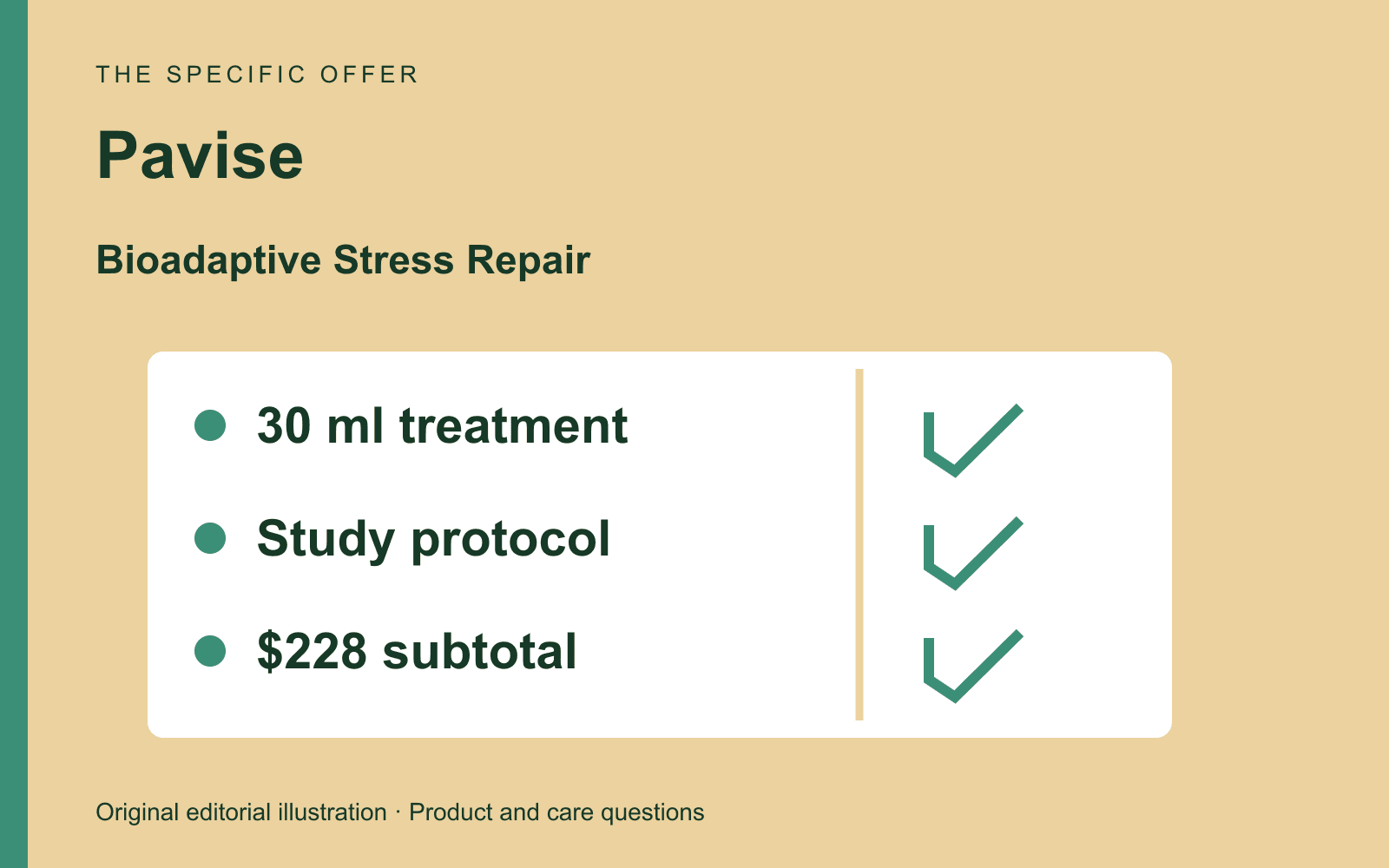
Pavise’s Bioadaptive Stress Repair page describes a 30-milliliter treatment and lists $228 as the one-time purchase price. It identifies DiamondCore biotechnology and five bioactive complexes. The page positions the product between cleansing or toning and moisturizer or sunscreen, rather than as a standalone sunscreen.
The listing presents several visible-skin results and describes an eight-week third-party clinical study. Those figures are company-presented findings. A percentage of users reporting a change, an instrument reading, and a randomized comparison with another product are different forms of evidence. The complete protocol is needed to interpret the claim.
Where this fits in an existing routine
Ask what the finished-product study actually measured and which participants were included. The product’s premium price makes that a reasonable purchase question. Keep the full current ingredient list and sensitive-skin considerations beside the evidence. We have not tested the treatment, assessed irritation, or measured changes in firmness or pigmentation.
The question to take to Pavise is specific: Can I read the complete finished-product study and confirm whether the selected bottle, refill, and subscription match the quote? Keep the answer with the current product or plan description. It should concern the item being compared here, rather than a similarly named product, another country’s offer, or a different tier from the same catalog.
Read the actual purchase or care cost
At the captured $228 price for 30 milliliters, product-only cost is $7.60 per milliliter. That figure describes the purchase, not an efficiency score or cost per clinical improvement. Subscription and refill options can change the amount. Confirm the bottle, refill compatibility, delivery, and renewal terms before using a discount in the comparison.
Save the selected quote and its conditions together. Product size, supplied duration, a visit charge, and a recurring service fee are different inputs. If an amount remains unquoted, leave it unresolved. A convenient payment format does not establish that Pavise is the lowest-cost complete option for every reader.
What the cosmetic claim actually demonstrates
Claims of cellular regeneration, ROS reduction, or enhanced penetration do not by themselves establish that skin age has been reversed. A cosmetic endpoint should remain a cosmetic endpoint. The treatment should also not be described as having the same sun-protection directions as a different Pavise product merely because both use a named technology.
NCCIH’s guide to health-news reading asks who produced the information, what evidence supports it, and what it actually establishes. Apply those questions to cosmetic marketing too. A laboratory mechanism, a customer questionnaire, and a controlled finished-product study answer different questions; combining their headlines does not create stronger evidence.
Read two different comparisons alongside this review
Caire Beauty adds a comparison centered on a midlife-focused cleansing balm rather than hormone treatment. Its named offer is The Grownup Cleanser. Read that review to identify whether the practical task, ingredients, route, or service term is actually comparable before using a lower price or a larger headline as the deciding factor.
Mother Science takes another approach through Molecular Hero Serum, with a Malassezin-focused cosmetic serum and the meaning of antioxidant claims as the main review question. Keep those differences visible. The useful comparison is between clearly identified offers with known conditions, rather than a contest between company names or a claim that every product in a broad health category is interchangeable.
Our view and the next useful question
Pavise is a useful specialist review for readers comparing a premium treatment with a simpler moisturizer or serum. The evidence request should be proportionate to the claim and price. Its branded technology deserves inspection, while the finished-product study and current package determine what can actually be concluded.
Before deciding, resolve the exact identity, the complete commitment, and the question this review leaves open: Can I read the complete finished-product study and confirm whether the selected bottle, refill, and subscription match the quote? Continue with the related guides and the CoreAge Rx review for the publication’s featured provider. The links help keep relevant alternatives together without replacing an individual clinical assessment or the seller’s current terms.
Sources on this desk
Official pages checked October 3, 2026. A provider page supports published terms; it is not an independent outcome study.